

Today, March 8th, we celebrate International Women's Day. It commemorates the struggle of women to claim their participation in society without discrimination based on sex.
But, what are the origins of March 8th?
The History of March 8th
The story goes back more than 100 years, specifically to March 8, 1857, when hundreds of women workers in a New York textile factory marched through the streets against low wages.
They were paid less than half of what men earned. That day ended with 120 women dead due to police brutality and prompted the workers to found the first female labor union. It wasn't until 1909 that the Socialist Women's Day was celebrated for the first time in the US, on February 28th. In 1910, the Second International Socialist Women's Conference established March 8th as International Working Women's Day.
A year later, in 1911, the first International Women's Day was celebrated in Denmark, Germany, Austria, and Switzerland, demanding the right to vote, to professional training, to hold public office, and to safe work without discrimination.
Year by year, the number of countries joining the celebration of March 8th grew, until 1975, when the UN recognized it as International Women's Day.

It was 1977 when March 8th, International Women's Day, was celebrated for the first time in Madrid. An event at the Pozo del Tío Raimundo, in Entrevías, brought feminists together under the slogan "not one woman in prison, not one woman without work."
That day, feminists asked for amnesty for crimes of opinion and expression, also for women prisoners convicted of adultery, abortion, or prostitution.
The movement continued to grow steadily until 2017 arrived, and with it, the first international feminist strike under the slogan "If we stop, the world stops."
It was not only a labor strike, but also a consumer, care, and student strike. Because sexism permeates every aspect of our lives, and therefore, so does feminism.
Although we may not take to the streets en masse this year, it will continue to be celebrated all over the planet, because the feminist movement is supportive and international, and because there are many struggles, thousands of realities, and millions of different women, but only one goal: EQUALITY.
Såper, ecology and feminism
At Såper, we have always joined this initiative to support women. And how have we done it? Well, because since 2012 we have been leading an organic cosmetics brand with very firm ecological values that align with ecofeminism, which goes beyond simply combining the two claims that make up its name. As Yayo Herrero, a leading figure of ecofeminism today, says: "the link between ecology and feminism and its potential dialogue has to do with the question -what sustains life-. And if we ask ourselves what sustains life, we must recognize that we are radically dependent beings on a planet Earth that has physical limits... This means that there is no economy, nor technology, nor politics, nor society, without nature."
That is why we believe in fair, responsible, sustainable trade that is respectful of nature and the environment. We do not conceive of the development of cosmetic products that do not meet all these requirements; we produce toxin-free products with organic botanical ingredients that have been grown without pesticides, which contributes to the care of the earth and animals, and we have located our laboratory in a rural and natural setting.

Botanical Women
We want to take advantage of this very important day for women to remember the silenced work of many female scientists dedicated to botanical research. In the case of Spain, we have Blanca Catalán. This name probably means nothing to anyone, but Blanca was the first female botanist in our country. She was born in 1860 and was educated at home, together with her sister, thanks to the interest of her mother who instilled in them the art of observing nature. From there, at just 20 years old, Blanca published in the scientific supplement of the Teruel newspaper "La Provincia" a study where she described 83 species that she had meticulously studied and drawn. Among them was a flower that was still unknown to science, the Saxifraga Blanca, which took the name of its discoverer.
Her career was short, not going beyond the age of 28, when she got married.
Throughout history, there have been many more women dedicated to the world of botany—to the study, collection, description, and creation of herbariums. Most of them have not gone down in history, nor do they appear in scientific studies. The discoveries of new species made by these women were published by their male colleagues, who did have university studies and social recognition as scientists.
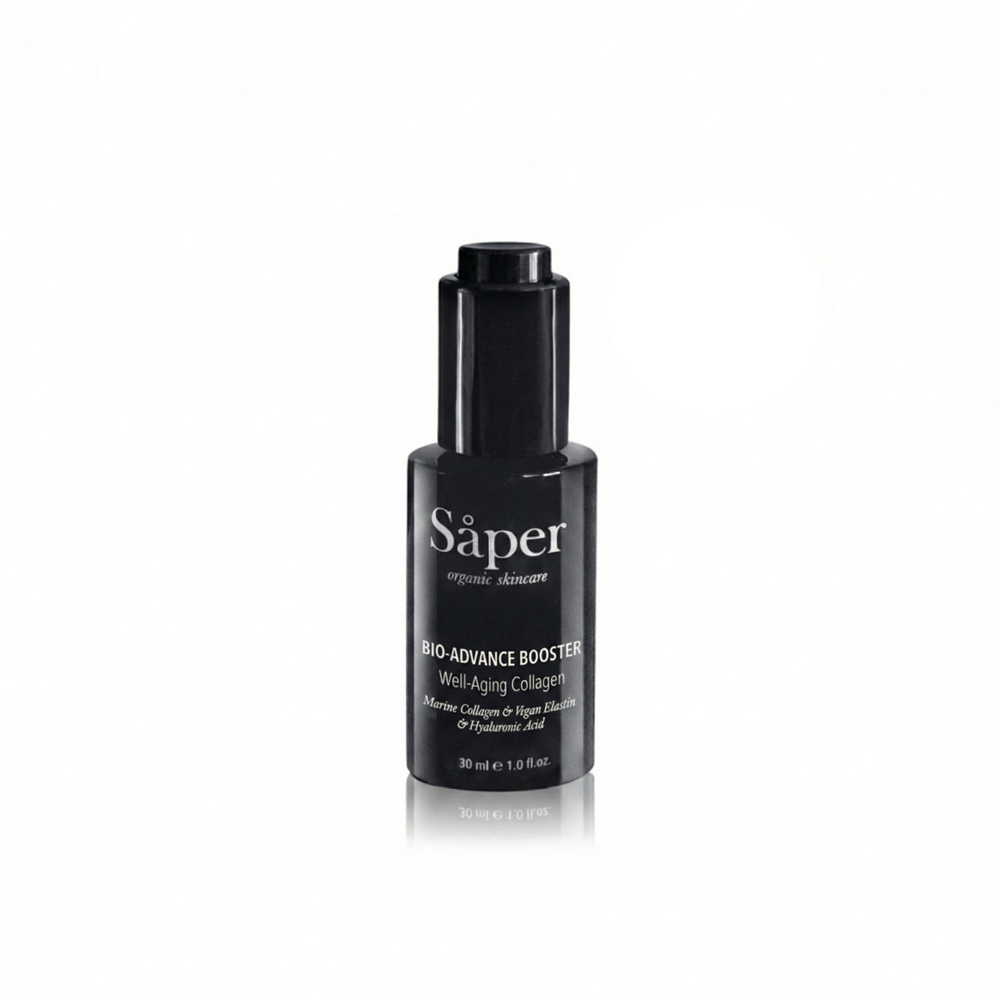
The world of botany is fascinating, and many of the active principles of plants have been studied and, above all, tested by women throughout history. We base all our products on botanical plants with cosmetic properties, such as helichrysum extracts, sea buckthorn, or mallow; many of them are produced in our laboratory, such as calendula, mallow, or birch.
We invite you to discover them in the products of our new anti-age line.
Happy week and happy Women's Day!