

As Såper's founder and the formulator behind our products, one of the questions I hear most often is: how can I find out what is really in my cream? My advice is to start with the INCI list: the ingredients listed after the word “Ingredients”. It helps you understand the formula and make more informed choices, although it does not reveal every concentration or predict how your skin will respond.
You do not need to memorise the names. Let's read a label step by step, with an example from Såper and a tool that makes it easier: our INCI Scanner.
What is INCI in cosmetics?
INCI stands for International Nomenclature of Cosmetic Ingredients. These standardised names help you recognise a substance regardless of the language on the packaging. In the European Union, labels use the glossary of ingredient names provided for in the legislation.
That is why you may see Aqua for water or Tocopherol for vitamin E. Plant ingredients use botanical names, such as Argania Spinosa Kernel Oil, which is argan oil. A long name may simply refer to a plant you know well.
The INCI list is a useful starting point for understanding what you buy. To explore a name further, you can use our ingredient glossary and the European Commission's CosIng database. CosIng is an information resource: an entry does not, by itself, mean that a substance is authorised for every use.
How to read a cosmetic INCI list in five steps
1. Find the complete list
Look at the back of the packaging, the box or the attached label. Find “Ingredients” and read the whole list. A phrase such as “with argan oil” highlights one ingredient; the list shows you what accompanies it.
If you are browsing an online shop, compare the information with the packaging of the product you have at home: the formula or its labelling may have changed.

2. Understand the order, including an important exception
The general rule is descending order by weight at the time the ingredients are added. However, ingredients below 1% may appear in a different order, after those above that percentage. Some colourants have specific rules. These are set out in Article 19 of the EU Cosmetics Regulation.
What does that mean for you? The position offers clues, but you cannot calculate percentages from it or conclude that the last ingredient is always present in the smallest amount. Nor is it enough to judge effectiveness: a formula is designed and assessed as a whole, and its components do not all need the same concentration to do their job.
3. Read the asterisks and their explanation
On Såper labels, one asterisk usually identifies organic ingredients and two asterisks identify components naturally present in essential oils. Always check that product's key: the symbols need an explanation and do not replace information about certification.
Finding an organic ingredient does not, on its own, tell you what percentage of the cosmetic is organic. Look for the product information and the relevant certification mark if this matters to you.

4. Recognise “Parfum”, allergens and “nano”
Parfum identifies a fragrance composition. Some of its components must be declared individually above the specified thresholds. Limonene, Linalool and Citral are examples of fragrance allergens listed by AEMPS, the Spanish medicines and healthcare products agency; they can also come from essential oils.
Their presence does not mean that everyone will react, but it is important information if you have a known allergy. A natural origin does not rule out sensitisation. Nor does “Parfum”, on its own, tell you that phthalates or endocrine disruptors are present.
The indication (nano) appears after the name when an ingredient is present as a nanomaterial. It describes a regulated characteristic of the ingredient; it is neither a prefix nor an automatic conclusion about the product's safety.
5. Read the rest of the label too
The ingredient list does not tell you everything. Check the product's function, precautions, batch number and minimum durability date or period after opening, where applicable. These details help you use it correctly. AEMPS explains what information must accompany a cosmetic product.
An INCI example: Radiant Skin Serum
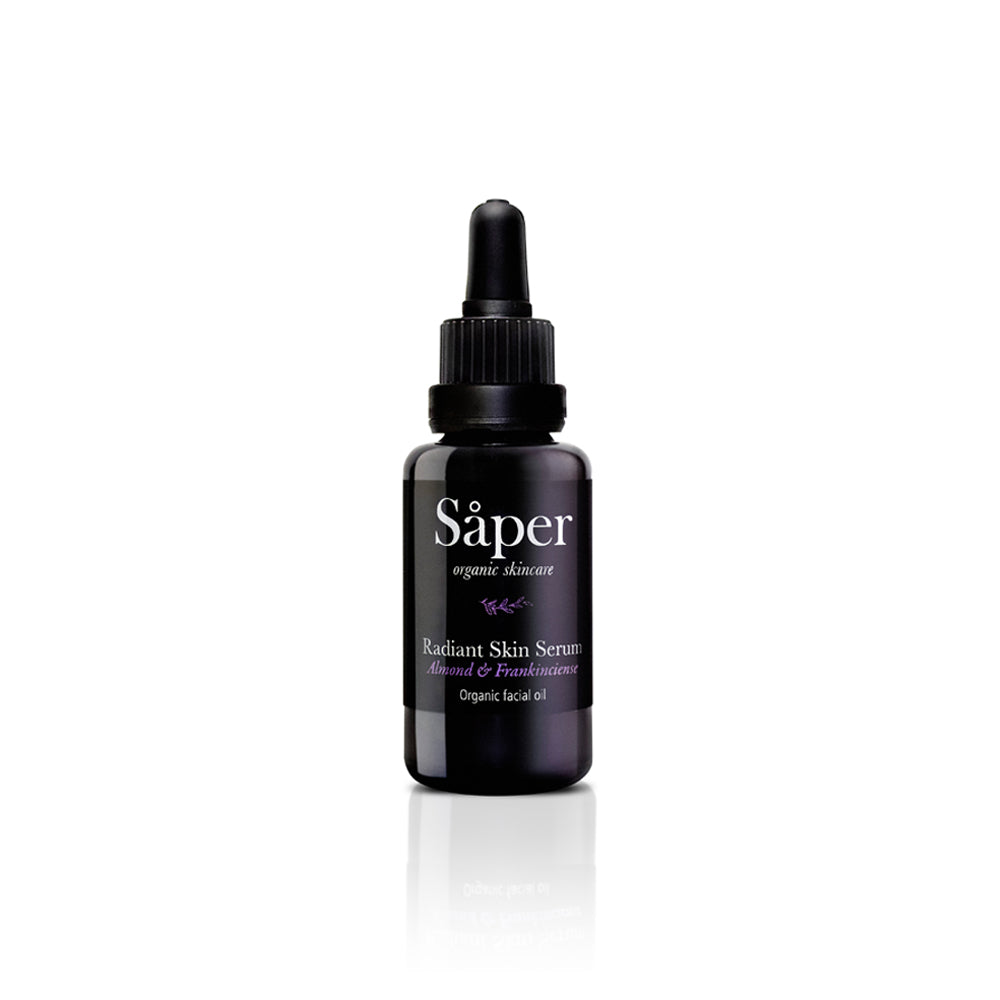
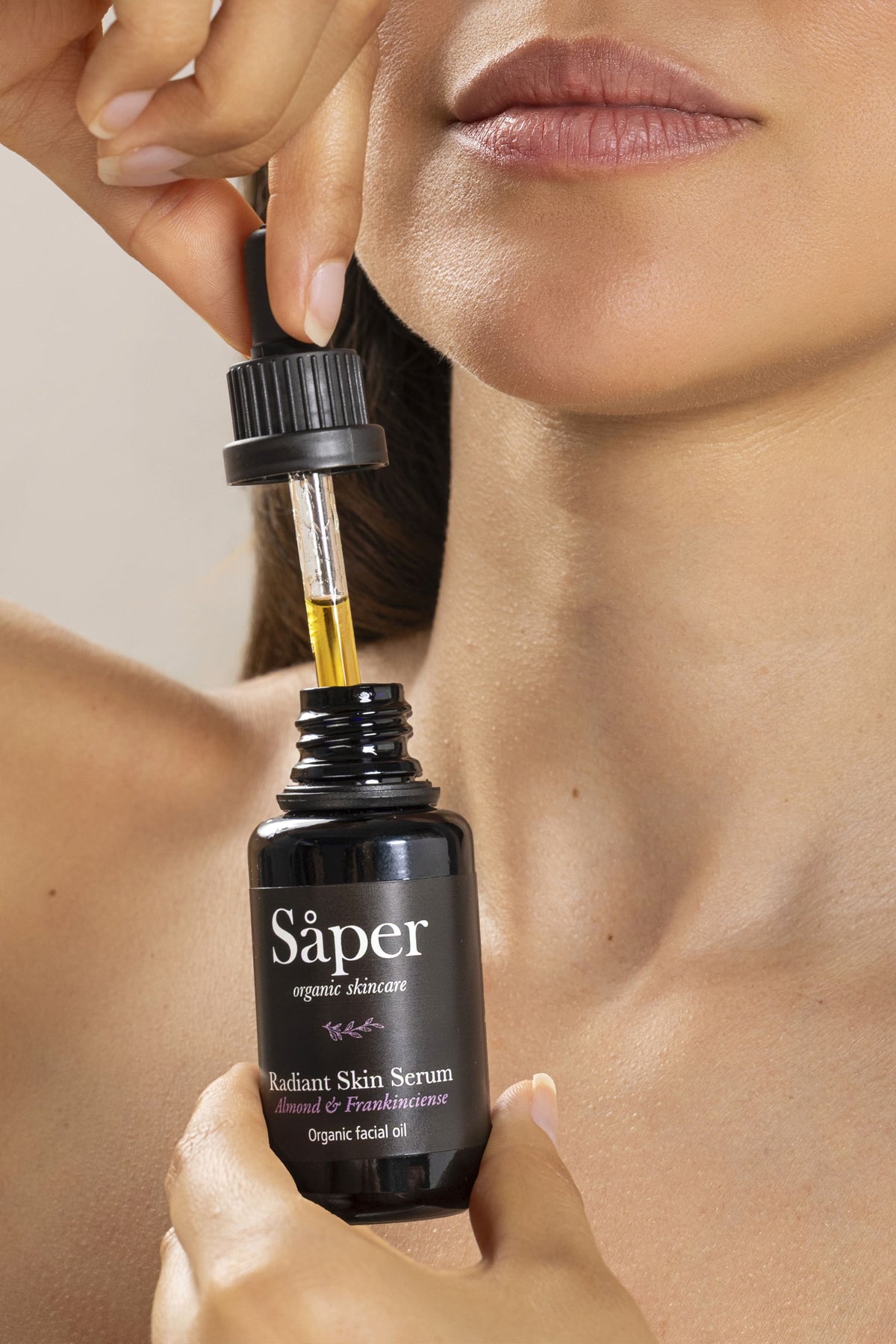
Let's look at a specific product: our Radiant Skin Serum. Its product page includes these names, among others:
- Rosa Canina Fruit Oil: rosehip oil.
- Argania Spinosa Kernel Oil: argan oil.
- Sesamum Indicum Seed Oil: sesame oil.
- Tocopherol: vitamin E, also used for its antioxidant function in the formula.
- Limonene, Linalool and Citral: fragrance components to consider when reading the label.
This selection helps you recognise names; it is not the complete formula. You can check the full list and its key on the serum's product page and compare them with your packaging.
Notice something: highlighting the plant oils we have chosen does not make the other names “bad” ingredients. Each component needs to be understood in terms of its identity and function, and someone with a fragrance allergy also needs to check an organic formula.
Såper INCI Scanner: help with reading your label
Is the print too small? Do all those names leave you confused? With the Såper INCI Scanner, you can photograph the list or paste it in manually and consult an indicative analysis based on organic cosmetics criteria.
Here is how I suggest using it:
- Capture the complete list, in good light without glare, or copy it exactly as it appears.
- Check the recognised names. One missing letter can change how an ingredient is identified.
- Specify the product type and area of use when the tool asks you to.
- Read the result in context: use it to understand the formula and decide what you would like to ask the brand.
The scanner makes reading easier, but an organic classification is not a safety assessment or a diagnosis of your skin. The INCI list also does not provide all the concentrations needed to assess exposure. If your concern is hormonal, you can compare the names with our guide to ingredients assessed for possible endocrine activity.
Read my cosmetic's ingredients with INCI Scanner
Are there ingredients you should always avoid?
A list of entire ingredient families cannot answer that question well. Parabens, silicones, PEGs and preservatives include substances with different functions and assessments. Sharing part of a name is not enough to attribute irritation, clogged pores or hormonal effects to all of them.
For example, the SCCS considers Phenoxyethanol safe as a preservative at up to 1% under the conditions of its assessment. A brand's preference for another preservation system does not prove that this authorised ingredient is dangerous.
To make an informed choice, distinguish between an individual allergy, a legal restriction and a formulation preference. We explain this in our guide to ingredients to check or avoid depending on the circumstances.
My advice as a formulator
Start with a cosmetic you use every day. Read its label, identify two or three ingredients and ask about anything you do not understand. You do not need to turn every purchase into a chemistry exam.
At Såper, we choose organic cosmetics and want to explain our formulas transparently. For me, that also means recognising the limits of a label: a short list, a plant name or a certification mark does not guarantee that a product suits every skin type.
Understanding what you buy helps you choose freely, according to your needs and values. That is what I want you to gain from reading the INCI list.
Sources and review date
Documentary review: 28 September 2026. Regulatory scope: European Union. References on labelling, safety and allergens are linked in each section. The Radiant Skin example was checked against its published product page on this date.
Fragrance allergen labelling is being expanded: since 31 July 2026, the new requirements apply to products being placed on the market, with a transition period until 31 July 2028 for certain products already placed on the market. This is why labels may show different levels of detail. See the European Commission's explanation.